Infopost: Reproductive Justice

You are undoubtedly aware of the Reproductive Rights movement, which advocates for access to sex ed, birth control, abortions, and medical care during pregnancy and birth. And those things are absolutely very necessary for the health of individuals as well as for the society which those individuals live in. But those things are all rather limited in the grand scheme of things and as it turns out, we need to recognized the interconnectedness of all things not just through intersectional feminism, but through Reproductive Justice as well.

According to Sister Song, a respected source in the RJ movement since 1997, the Reproductive Justice Movement was named in 1994.

“Indigenous women, women of color, and trans* people have always fought for Reproductive Justice, but the term was invented in 1994. Right before attending the International Conference on Population and Development in Cairo, where the entire world agreed that the individual right to plan your own family must be central to global development, a group of black women gathered in Chicago in June of 1994. They recognized that the women’s rights movement, led by and representing middle class and wealthy white women, could not defend the needs of women of color and other marginalized women and trans* people. We needed to lead our own national movement to uplift the needs of the most marginalized women, families, and communities.” (1)

Many RJ sources quote Audre Lorde when she said, “There is no such thing as a single-issue struggle because we do not live single-issue lives.”

So what is Reproductive Justice, then? Sister Song defines it as “the human right to maintain personal bodily autonomy, have children, not have children, and parent the children we have in safe and sustainable communities (1).”

And what does Reproductive Justice look like? It includes awareness and advocacy not just for the same issues as the Reproductive Rights movement calls for, but also for environmental issues, prison reform, economic justice, LGBTQIA+ rights, and it also specifically advocates for the rights of people to have children if they choose – the US in particular has a long and dark history of forced or coerced sterilizations of people of color and disabled folx. So buckle up if you’ve got the spoons for this post, cause it’s gonna be a hard road to walk.

(And please remember, white, cis, straight, abled folx, that when I talk about “spoons” that is not for you in this case. It is your responsibility to learn this history and to share this history among your peers. Marginalized folx already know this and do this.)
Already we recognize that the classism and racism in our culture is toxic and must be eradicated. But it becomes a Reproductive Justice issue when you also acknowledge that without universal, equitable healthcare, many cannot afford it (2). And if one cannot access healthcare, it logically follows that one therefore cannot access birth control, gestational and birth care, cancer and heath screenings, or healthcare for any children one has. Ms. Magazine has a nice little article up that notes how various aspects of economic injustice contribute to a lack of access to healthcare:

  • “women of color are disproportionately segregated into work sectors that are least likely to have access to paid family leave, paid sick leave and protections for pregnant women (2).”
  • “70% of tipped workers are women and they are three times more likely to be in poverty and experience five times the rate of sexual harassment. When the minimum wage goes up to $15, tipped workers will still be left at $5 (2).”
  • “when we talk about domestic abuse, we have to consider the experiences of undocumented people who do not report out of fear of deportation (2).”
  • “At [Planned Parenthood New York City], we see over 64,000 patients every year, many of whom are women of color, low-income and poor, immigrant and undocumented, and young people. Last year, we gave financial assistance to 10,600 patients (2).”

  • We also need to talk about the Hyde Amendment. In 1977, just four years after Roe V Wade, the US backpedaled in the name of “compromise” and “appeasing the Right” and enacted the Hyde Amendment which bars the use of federal funding for most abortions.

    (Side note here: WE DO NOT COMPROMISE ABOUT HUMAN RIGHTS. THERE IS NO COMPROMISE ABOUT HUMAN RIGHTS. DO NOT COMPROMISE ABOUT HUMAN RIGHTS. STOP IT. STOP IT FOREVER.)

    Anyway. Without federal funding, low income folx cannot access most abortions on their own. Which is why we have Planned Parenthood being known for abortions when their original goal was contraception, and the majority of their services are healthcare and cancer screenings.

    But, wait! There’s more!

    “The [Hyde] amendment hinders the ability of all low-income women to terminate a pregnancy and disproportionately affects women of color, but it discriminates against Native women specifically because they are entitled to receive health services from a federal agency (3).”

    I’ll do a post on what intersectionality is at another time, but this is a good example. Many Americans struggle to access healthcare. Women struggle more than men. Women of color more than white women. And, in this respect, at least, Native American women are impacted the most. Where their identities of woman and Indigenous intersect is where they are the most impacted.
    Environmental Justice becomes a Reproductive Justice issue when it interferes with a person’s rights or ability to have and raise (or to not have) a child. This is pretty obvious when you look at the communities struggling during and in the aftermath of major storms like Katrina or Harvey. As global warming continues and storms become more destructive (4) I don’t have to elaborate on how that will affect families, particularly poor families (of which BIPOC make up a disproportionate amount).

    But things like the Flint water crisis are also examples of how Environmental Justice is a fundamental part of Reproductive Justice. Michael Moore reminds us that “you cannot reverse the irreversible brain damage that has been inflicted upon every single child in Flint. The damage is permanent (5).” Furthermore, residents’ reproductive organs may be affected (5). The City of Flint’s website does not have any updates on the situation past last July and this article by a PBS affiliate dated October 2021 notes that “As of June, just over 10,000 pipes have been replaced in Flint and the city’s website says it is in the final stage of replacement, but even still residents struggle to trust that the water is safe to drink (6).”

    If people do not have access to a safe environment in which to raise any children they choose to have, they lack Reproductive Justice. Chernobyl, Fukushima, the BP oil spill in the gulf, the issues with the Cuyahoga River, current and future pipelines, etc…. It’s all included here.

    And a reminder that while these events are global and affect many, many people, it is still BIPOC folx who are affected disproportionately because they are more likely to be living near these places, more likely to live below the poverty line and therefore have fewer options with which to remove themselves. Wealthy white people do not choose to build toxic places near their homes. (Eat the rich, by the way.)
    “Over half (58%) of all women in U.S. prisons are mothers, as are 80% of women in jails, including many who are incarcerated awaiting trial simply because they can’t afford bail (7).”

    When pregnant people are incarcerated, it is still routine within the United States to shackle them during labor and birth despite no evidence that it is necessary. JAAPL notes that “Most incarcerated women are not violent offenders. . . and there are no known escape attempts among inmates who were not restrained during childbirth (8).”

    They also note that “Potential negative health effects of restraints include increased discomfort, limited mobility, increased fall risk, delays in medical assessments during obstetrical emergencies, increased risk of blood clots, interference with normal labor and delivery, and interference with mother–infant bonding (8).”

    And they say that “Currently, 22 states have some legislation restricting the use of shackles during pregnancy, with some of these banning shackling only during active labor and delivery (8).”

    Once the baby is born, they are nearly always separated from their birthing parent in the United States. This is not, it turns out, the global norm. There are only four nations that routinely separate infant and parent: The United States, The Bahamas, Liberia, and Surinam (8).

    The good news is that there are a few prisons in the US that are working to change this. NPR has a really lovely article about this, stating that “Washington Corrections Center for Women is one of at least eight prisons in the country that allows a small number of women who are pregnant and give birth while incarcerated to keep their newborns with them for a limited time (9).” These places aren’t like Orange is the New Black – they are safe and appropriate for babies and toddlers. They are built to be child- and family-oriented and studies have shown that they benefit for the baby and the parent (10).

    Another problem unique to parenting while incarcerated is presented by The Adoption and Safe Families Act of 1997 which intends to get children out of the foster care system and into adoption as soon as possible. While perhaps a noble goal, for parents whose children are in foster care while they serve their time it becomes a risk of losing ones child altogether. If a child is in foster care for fifteen months of the previous two years, parental rights are terminated (8).

    And a quick reminder here that prisons are literally modern slavery, per the Thirteenth Amendment of the US Constitution. According to Wikipedia, “While the United States represents about 4.2 percent of the world’s population, it houses around 20 percent of the world’s prisoners.” Putting all of this information together together makes the whole situation look kinda sus tbh.
    BIG trigger warning for this whole section.

    Ah, joy of joys. I’ve saved the most fun subject for last. (That’s sarcasm, this is the least fun subject. Maybe. Maybe they’re all equally horrific. The United States is a flat-out dystopia.)

    Did you know that the Nazis quite literally modeled their eugenics program after the United States? After California, specifically, in fact (11). Yeah. Gross.

    “Beginning in 1909 and continuing for 70 years, California led the country in the number of sterilization procedures performed on men and women, often without their full knowledge and consent. Approximately 20,000 sterilizations took place in state institutions, comprising one-third of the total number performed in the 32 states where such action was legal (11).”

    This was a program that specifically focused on the Disabled community. Justice Oliver Wendell Holmes famously said, “Three generations of imbeciles are enough” when a disabled woman whose mother was also disabled was sterilized after having a child (11).

    But they didn’t limit themselves to just Disabled folx, they also sterilized minorities. There are noted examples in Puerto Rico (11), and in Los Angeles among Latina women, many of whom were forced to sign papers in a language they did not speak or read while in active labor (watch the documentary No Más Bebés). Time Magazine notes that in the 1970s, at least 25% of Native American women were sterilized, but the numbers are actually likely higher (12).

    But the worst part is that none of this is ancient history (not that 1979 is ancient history…). A number of incarcerated women were sterilized without lawful consent in California in the first decade of this new millennium (13). And don’t forget that as recently as 2020 it came to light that ICE was sterilizing immigrant women without lawful consent (14).
    Access to good, complete sex ed, and to abortions and birth control, as well as to gestational and birth care are absolutely necessary. But, proportionally, white women deal with these other issues less often. And, historically, we tend to forget (or worse) about others when we are doing activism. Hence, Reproductive Justice was born. Just like how feminism isn’t truly feminism if it’s not intersectional, the fight for reproductive freedom means nothing if we don’t remember to include all of these other aspects of being a human.

    Additionally, we must also remember to include LGBTQIA+ issues in our work – but there has not been research done on, for example, trans fathers in prison (also we need to research that and other niche areas). Remember that queer folx need access to birth control and abortions, too. Remember that some men give birth.

    We must remember that the gestational and childbirth mortality rates in the United States are abysmal. We have twice the birth mortality rate compared to other high-income nations at 17.4 per 100,000 births (15). France is next highest with 8.7 deaths per 100,000 births. New Zealand, Norway, and the Netherlands have 3 or fewer deaths per 100,000 births. But wait, it gets worse! For birthing folx who are Black, the rate in the US is 37.1 deaths per 100,000 births. What, and I want to be very clear here, the FUCK? (15)

    None of us are free, while so many of us cannot access their basic human rights. Take this information and share it and together we can begin to fix this mess we call a society.

    Fellow white folx, please remember: While it is absolutely imperative that we make Reproductive Justice a priority, we must remember that it is not our movement. As allies, we should share information, but never speak over BIPOC or any other marginalized community, particularly in a movement they started.

    If you’ve read this far, you’ve earned a cookie.
    1. “Reproductive Justice.” Sister Song, Sister Song, https://www.sistersong.net/reproductive-justice

    2. Ko, Michele. “Economic Justice Issues Are Reproductive Justice Issues.” Ms. Magazine, Ms. Magazine, 8 Feb. 2019, https://msmagazine.com/2016/10/18/wont-wait-issues-economic-justice-issues-reproductive-justice/

    3. Theobald, Brianna. “The Native American Women Who Fought Mass Sterilization.” Time, Time, 5 Dec. 2019, https://time.com/5737080/native-american-sterilization-history/

    4. “Environmental Justice Is Reproductive Justice and Reproductive Justice Is Environmental Justice.” Planned Parenthood, Planned Parenthood, 1 July 2020, https://www.plannedparenthoodaction.org/planned-parenthood-great-plains-votes/blog/environmental-justice-is-reproductive-justice-and-reproductive-justice-is-environmental-justice

    5. Pickens, Josie. “#FlintWaterCrisis Is a Reproductive Justice Issue.” Ebony, Ebony, 2 Feb. 2016, https://www.ebony.com/news/flint-water-crisis-reproductive-justice/

    6. Blakely, Natasha. “Seven Years on: The Flint Water Crisis Has Yet to Conclude.” Great Lakes Now, PBS, 27 Oct. 2021, https://www.greatlakesnow.org/2021/10/seven-years-flint-water-crisis/

    7. Bertram, Wanda, and Wendy Sawyer. “Prisons and Jails Will Separate Millions of Mothers from Their Children in 2021.” Prison Policy Initiative, https://www.prisonpolicy.org/blog/2021/05/05/mothers-day-2021/

    8. Friedman, Susan Hatters, et al. “The Realities of Pregnancy and Mothering While Incarcerated.” Journal of the American Academy of Psychiatry and the Law, Journal of the American Academy of Psychiatry and the Law Online, 13 May 2020, http://jaapl.org/content/early/2020/05/13/JAAPL.003924-20

    9. Corley, Cheryl. “Programs Help Incarcerated Moms Bond with Their Babies in Prison.” NPR, NPR, 7 Dec. 2018, https://www.npr.org/2018/12/06/663516573/programs-help-incarcerated-moms-bond-with-their-babies-in-prison

    10. Clarke, Matthew. “Benefits of Allowing Prisoners to Raise Babies Born in Prison.” Prison Legal News, Human Rights Defense Center, 3 June 2016, https://www.prisonlegalnews.org/news/2016/jun/3/benefits-allowing-prisoners-raise-babies-born-prison/

    11. Ko, Lisa. “Unwanted Sterilization and Eugenics Programs in the United States.” PBS, Public Broadcasting Service, 19 Nov. 2020, https://www.pbs.org/independentlens/blog/unwanted-sterilization-and-eugenics-programs-in-the-united-states/

    12. Theobald, Brianna. “The Native American Women Who Fought Mass Sterilization.” Time, Time, 5 Dec. 2019, https://time.com/5737080/native-american-sterilization-history/

    13. Johnson, Corey G. “Female Prison Inmates Sterilized Illegally, California Audit Confirms.” Reveal, 2 July 2015, https://revealnews.org/article/female-prison-inmates-sterilized-illegally-california-audit-confirms/

    14. Narea, Nicole. “The Outcry over Ice and Hysterectomies, Explained.” Vox, Vox, 15 Sept. 2020, https://www.vox.com/policy-and-politics/2020/9/15/21437805/whistleblower-hysterectomies-nurse-irwin-ice

    15. “Maternal Mortality and Maternity Care in the United States Compared to 10 Other Developed Countries.” Commonwealth Fund, 18 Nov. 2020, https://www.commonwealthfund.org/publications/issue-briefs/2020/nov/maternal-mortality-maternity-care-us-compared-10-countries
    BBFH: Ida B Wells

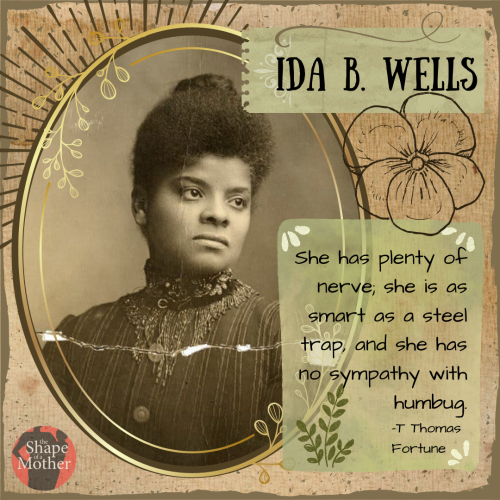
    Damn, I knew this lady was a badass bitch, but when I dove into this research I was thrilled to learn exactly how few fucks she had to give. T Thomas Fortune, a Black civil rights leader, journalist, and publisher, once said of Ida that she “has plenty of nerve; she is as smart as a steel trap, and she has no sympathy with humbug.” And like damn if that’s not accurate. Let’s dive in and see just how little sympathy with humbug this badass bitch had.

    Born into slavery about six months before Lincoln signed the Emancipation Proclamation*, Ida’s childhood was informed by the Reconstruction era and the work that Black folx of the South were doing at the time. Something that may be important to note here, that I certainly never learned in high school history, is that in the years directly following the end of the Civil War, there were as many as 1500 Black officeholders elected to office before white southerners began enacting voter restriction laws. Ida’s father was not in government, but he did help to found Rust College, an HBCU (Historically Black Colleges and Universities), which Ida attended. So she comes from a family of Badasses.

    Unfortunately when she was a teenager, she lost both of her parents and one of her siblings during a yellow fever epidemic. Out of this tragedy, she arose, pulled up her badass britches, and stepped into the path of no humbug that she followed her whole life.

    Although she was only sixteen at the time, she convinced a local school administrator that she was eighteen and qualified to be a teacher (1). In this manner she was able to continue to support her five younger surviving siblings.

    A few years later, a rather inciting incident took place. She bought a first class train ticket and hopped on board with all the other first class passengers. Once the train was underway, she was asked to move to a car designated for Black riders. Like Rosa Parks would nearly a century later, Ida refused. She’d paid for first class, for fucks sake. Having no respect for human beings, the crew tried to physically remove her at which point she, in her own words, “fastened [her] teeth in the back of his hand (2).” Fuck yeah you did, Ms. Wells! While that particular dudebro would not go near her again, other crew members dragged her out anyway. Ida wrote, “They were encouraged to do this by the attitude of the white ladies and gentlemen in the car; some of them even stood on the seats so that they could get a good view and continued applauding the conductor for his brave stand (2).” She sued the railroad and won. For a time, anyway. The decision was eventually reversed by the Tennessee Supreme Court (1).

    So, like so many badass bitches, she began writing. She had articles published in various newspapers and even went on to own two papers herself (1). However, because she preferred to remain not murdered, she used the pseudonym “Iola” (3). She continued teaching even while she was writing and often wrote about the inferior conditions of Black schools, demanding equality.

    When three of her friends were lynched, she responded in the only way she knew how: she spent two months travelling through the south, collecting information on lynchings and writing about them, and eventually publishing a pamphlet and taking her anti-lynching campaign across the Atlantic to Europe and Great Britain (3). She was not fucking around. No sympathy with humbug.

    It feels like such a silly detail to follow that epic part of her story with, but in reality I think it’s remarkable to remember that when Ida got married in 1895, she was one of the first American women to keep her maiden name (1). Fuck yeah. No sympathy with humbug patriarchy, y’all. Never forget where we come from, fellow women. It may be commonplace today to keep our names, but it was revolutionary at one time and Ida got in on the ground floor.

    But she wasn’t just an investigative journalist, writer, publisher, orator, educator, wife, and mother. She was also a suffragist.

    (Fun fact because I like fun facts: “suffragette” is a term that actually only applied to one small group of suffragists in Great Britain who were kinda known for their mild violence. Throwing bricks through windows and whatnot. Everyone else was a “suffragist.”)

    When I am educating people on feminism and feminist ideals, I often remind them that feminism has historically been exclusionary. The suffragists excluded Black women, the women’s libbers excluded lesbians, and today some so-called feminists attempt to exclude transwomen. I use this fact as proof that it’s time to learn from our history and do better. Ironically, it’s always been an attempt to appeal to the perceived majority that prompts the exclusion. An attempt to “find the middle ground” (lol sorry but it’s not the middle ground if all of the people aren’t welcomed into the space).

    Ida faced this directly. Having no sympathy for humbug, she did what Ida always did: what she fucking set her mind to.

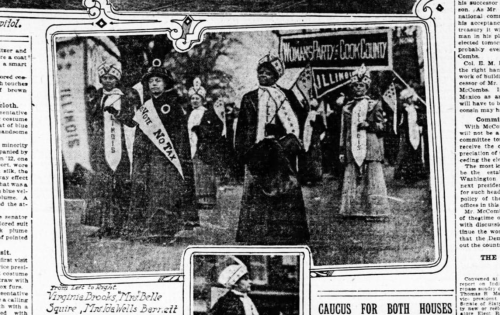
    In March of 1913, Alice Paul and other suffragists had planned a march on Washington. Ida traveled to Washington DC with the Alpha Suffrage Club, an organization she helped to found in Chicago, with the intent to March. Although Alice was sympathetic to Ida, in the end it was decided that Black suffragists would have to march at the end of the parade instead of with their respective organizations. Ida was like fuck no everyone knows I’ve got no sympathy for humbug and she waited in the crowds along the street until her group marched by, at which point she just fucking joined them (4).

    The Chicago Daily Tribune published a photo of Ida B. Wells marching in the suffrage parade on March 5, 1913. Credit: Chicago Daily Tribune, found at wttw.com (4)

    God I love this woman.

    There is so much more she was involved with that this mini-bio doesn’t have time to go into. She’s considered a founding member of the NAACP, for instance (1). I highly recommend you go forth and google some shit. If each of us can find just a fraction of the amount of No Sympathy For Humbug that Ida did, we could change the world for the better real fucking fast. Keep that in mind, friends.

    *Remember, slavery did not end until… well, technically ever if you read the thirteenth amendment, which specifically allows for slavery as “punishment for crime,” but the amendment’s act of ending chattel slavery was not proclaimed until December 18, 1865.

    Works Cited
    1. “Ida B. Wells (U.S. National Park Service).” National Parks Service, U.S. Department of the Interior, 30 Dec. 2020, https://www.nps.gov/people/idabwells.htm.
    2. Leider, Polly. “Excerpt from ‘Lighting the Way.’” CBS News, CBS Interactive, 16 July 2007, https://www.cbsnews.com/news/excerpt-from-lighting-the-way/.
    3. Smith, Clint, host. Ida B. Wells: Crash Course Black American History #20. Crash Course, YouTube.com, 8 Oct. 2021, https://www.youtube.com/watch?v=ocbAfpjibr4. Accessed 15 Feb. 2022.
    4. “Standing up for Her Principles: Ida B. Wells and the Suffrage Movement: Ida B. Wells: Chicago Stories.” WTTW Chicago, WTTW Chicago, 21 May 2021, https://interactive.wttw.com/chicago-stories/ida-b-wells/standing-up-for-her-principles-ida-b-wells-and-the-suffrage-movement.

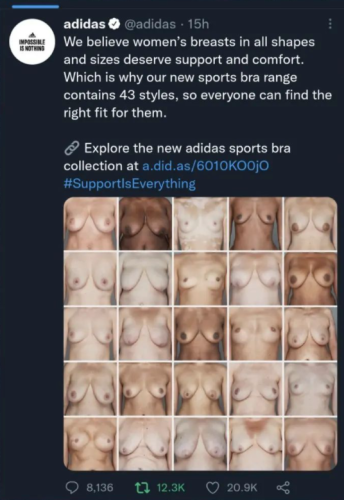
    Adidas Reveals New Ad That’s Just Boobies

    Have you seen this new Adidas ad?? I know it’s still trying to sell us something and I don’t trust any major corporation to be interested in anything but profit but even still I’ll take this bit of representation of how varied bodies can be. And if you needed this today, don’t forget to check out the o.g. body normalizing site, 007 Breasts.

    All boobies are good boobies.

    [Image shows a tweet by Adidas advertising their new sports bras by showing off 25 topless women with all sorts of boobs. Small ones, large ones, white ones, boobies of color, perky ones, ones pointing down, lopsided ones, ones with vitiligo.]

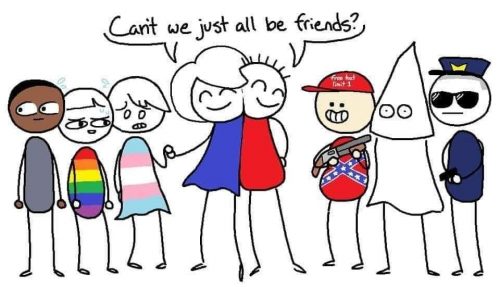
    Let’s not “Just Be Friends”

    A quick hello to my readers, and a thank you for being so patient with me as my family struggles through the worst year of our lives. I am working on slowly getting back to work here at SOAM.

    Joe Biden has been elected the new president of the United States!

    I hadn’t realized exactly how much the election (and the Trump presidency) had been affecting me until Saturday, which I spent crying with relief. Since then, each day has felt like I am floating. My god, it’s like the weight has been lifted (that’s a Killers lyric and I am absolutely making a Killers reference, you’re welcome).

    But it’s vitally important that we not become complacent in our relief because there is much work to be done. This pandemic has shown us the weaknesses in our society that existed even before Trump – lack of access to medical care, predatory landlords, the fact that the 1% really does not give a shit about their workers, only their capital gains. We’ve also seen how deeply racism runs in this nation – this isn’t new, it’s merely awoken. We were broken before Trump and now we have a chance to fix things for now and the future and we cannot fuck this up. Or we will be back here in four more years.

    It will be a lot of work.

    And that work may feel uncomfortable to some of you at first because we are taught from an early age that we should work to create peace with our enemies. And that isn’t untrue; it is a noble ideal. And it works if both parties are willing to examine themselves and move forward. But that is not the reality most of the time.

    It’s hard to examine ourselves. BTDT.

    I’ve seen a lot of liberal folx calling for peace and love right now. I’m fully down with that!

    But I want to be very clear that peace and love are not merely passive things. Peace and love don’t mean just sitting back and smiling because everything is okay. Peace and love are void if there isn’t a basis for peace and love holding them up.

    Peace and love are fierce. Peace and love are the mama bear of the social justice movements. Peace and love are out there fighting for the peace and for the love of marginalized folx. I’m not Christian but I know that Jesus wasn’t out there just sitting around saying “love each other” – he was also flipping tables and hanging out with prostitutes. Love is for the ones who need it. Love fights for their peace. Love prioritizes those who are marginalized and protects them.

    Love is here to comfort the afflicted. Love is here to afflict the comfortable, to help them grow and change. If they aren’t willing to do that work, they aren’t a part of the game. If they are unwilling to stop abusing, they don’t get protected. I’m here to include everyone except the excluders.

    Or, in not so many words:

    Now it’s time to do the dirty work. It’s time for education on racial, gender, sexuality, class, and other social issues. It’s time to shame those who refuse to move past our dark history and leave them behind in their hatred. They are always more than welcome to rejoin us when they are ready.

    But here’s the thing that your family and friends who are queer, BIPOC, Disabled, and/or experiencing poverty want you to know:

    as long as you are trying to “make the peace” without doing any of the work below the surface, you are not only not making peace, but you are actively upholding all these oppressive systems

    demanding that marginalized folx “just be friends” is silencing

    silence in the face of oppression is the side of the oppressor

    if nobody calls out the racism (homophobia, transphobia, xenophobia, misogyny, etc) the racism thinks it gets to say and we get another Trump in four years

    allies call out racism even if it’s “ugly” or “uncomfortable”

    Don’t silence marginalized communities. Just. Don’t.

    Here are some resources you can donate to if you are looking for ways to help keep the momentum from the election and turn it into real social justice activism to create a better world now. (Many of these are local to San Diego, but some have national affiliates.)

    San Diego Immigrant Rights Consortium
    San Diego Food Bank
    National Alliance on Mental Illness (NAMI)
    San Diego LGBT Community Center
    Border Angels
    Planned Parenthood
    Indigenous New Hampshire -thanks to reader Rikki who wanted to add that BIPOC are the folx who made this election happen and the indigenous of Arizona are credited with flipping their state. If you’d like to learn more or donate to the people whose land you are living on, you can find which nations once flourished where you live here.

    Just a quick note before I close here because I know there are some of you readers out there saying “I’m not here for politics! Get back to talking about body image!”

    Body image is inherently a feminist issue.

    Feminist issues are inherently political.

    Every single aspect of your life, from the roads you drive on, to the access to medical care you may or may not have are decided by politics.

    Identities cannot be separated from each other: because some women are Black, or disabled, or queer – feminism must also stand for those movements or else it is only for white women (and I am not here for that).

    Finally, the world has become so unstable and frankly outright dangerous, that body image may need to be set aside a little bit while we focus on, say, eliminating fascism from US government. I’ll never stop talking about body image and how important it is, or all the issues associated with it, but if people are dying body image doesn’t mean much, so let’s triage the issues and get folx safe before we drop these other pressing issues.

    Black Lives Matter (Anti-Racism Resources)

    I’m officially back, Readers!

    I apologize for not having a whole beautifully written statement on the events that have transpired here in the US and across the globe this week. I have long stood with the #BlackLivesMatter movement and I have been sharing everything I can on SOAM’s space on Facebook, so check that out for more resources including an album I am creating with various thoughts and perspectives on racism in the US.

    For understanding racism more fully, including historical context:
    A Timeline of Events that Led to the 2020 “Fed-Uprising” (Hint: it starts in 1619)

    Ben & Jerry are not fucking around.

    John Oliver killed it last night with his post on the events in the US this past week. Other timely John Oliver recommendations:
    Ferguson, MO and Police Militarization
    Police Accountability
    Sheriffs
    Confederacy

    Here is a list of Ted Talks to help you understand racism in America

    A list of Facebook pages to help parents discuss racism and decolonization.

    Resources for protestors:
    Teen Vogue killing it again: How to Safely and Ethically Film Police Violence

    Broadcastify is a website that allows you to access thousands of local police scanners. I often listen to my local police when I hear a lot of sirens, but during the riot in La Mesa, CA the other night, it was especially helpful.

    How to talk about racism, riots and looting, and other related topics:
    Why you should stop saying “All Lives Matter” explained 9 ways.

    How to respond to “Riots never solve anything!”

    Affirming Black Lives Without Inducing Trauma

    Tone Policing Is Just Another Way To Protect Privilege

    Let me know if there is anything else I should include here. There is a lot to take in here, but I’m sure it’s just the tip of the iceberg.

    Keep doing the good work, readers!

    Taking a Break- be back soon!

    Hello, friends! As you know, I struggle with a few disabilities and illnesses. Even before this stupid pandemic, my life was already a major struggle. Right now I can only do a very few things each day and I have some personal chores that need my attention urgently. So I’m going to spend the next two or three weeks catching up on all that and then I’ll be back here again working hard for you!

    I will still be active at our Facebook page, sharing memes or information. And if you’d like to help support the work I do here you can join our Patreon.

    I plan to be back by May 25 and will keep you updated if that changes.

    Thank you for always being so supportive and understanding!

    It’s official- I’m back!

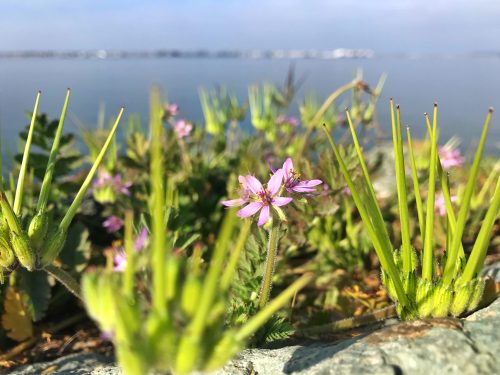
    This little plant, surviving on its own among rocks and dirt, with its green spikes and its delicate purple flower? This plant is my role model.

    Ugh.

    Life is messy.

    There’s this idea that we are supposed to grow up, get a degree and a career, find a husband, make some babies, and live happily ever after.

    I did it wrong. No- differently.

    I dropped out of college, married as an escape from an abusive childhood, had beautiful babies, grew up and began my life.

    I’ve just turned 42 and I’m only one year out of University and LET ME TELL YOU IT’S BEEN A HELL OF A YEAR.

    Because another thing about Life is that not only does it come in whatever order it comes in, but it likes to throw curveballs, too.

    Immediately after university I found a part time job tutoring junior college students in writing (and oh man it was like my FAVORITE job I’ve ever had). I intended to use the other part of my time to grow SOAM.

    But here’s the thing.

    Turns out I’m neurodivergent. I’m seeking diagnoses right now but I’m confident that I have ADHD and likely autism as well (grown women discovering this about themselves in middle age or later is a Whole Thing).

    I’ve watched over the years as bloggers who were just beginning at the same time I was succeed well beyond me, but I’ve felt paralyzed all these years because I don’t understand how to move forward. How do I write a book? How to I create and launch new projects? Etc. I’ve spent literal years saturated in my own shame for not succeeding but I didn’t know what else to do. I came to believe I was just “bad” at being self-employed.

    I now recognize this as executive dysfunction. And I know it’s not my fault. My brain is just built differently. Having this information is key to moving forward in literally every aspect of my life. It’s absolutely a positive thing, but it’s also a huge thing. With understanding one’s own neurodivergence later in life comes the need to deconstruct one’s own psyche, learning how it works, what it needs. It takes time to rebuild it. Right now I feel like I have pieces of my psyche, my soul, littering my living room, like a car’s engine in a hobbyist’s garage. It’s a lot.

    But that’s not all that happened last year.

    I also found out my bones are dying and, later, that my hormones are trying to kill me via PMDD.

    Like I said. Hell of a year, I tell you what. (Hank Hill voice)

    I tried to go into my tutoring job one day in November and before I even clocked in, I began sobbing out of nowhere. I couldn’t stop. In fact I didn’t stop for a whole week until my stupid period started. I had to leave my job behind.

    This all comes on the heels of three years of dealing with my child’s disability which has been wildly unstable at times.

    I am burnt out, y’alls.

    I am seeking disability payments, but that is a Whole Process and can take years. I looked into cash aid, but they would take my other income from me and now allow me to make more (and also not give me more than I currently get. ??? Vogons never make sense).

    So I am shifting gears again. I tried it in the “real world” and the Universe not so gently nudged me back here, because it knows that this is where I belong.

    Understanding that I have problems with executive function not only lifts years of shame off my shoulders, but it also allows me to know that I need to seek resources and what resources to look for. I’m excited to re-begin my career with this new understanding of myself; I can’t wait to see what I am really capable of – what SOAM is really capable of!

    Back here to SOAM, back to where my heart is and where my psyche is nourished. Working a flexible schedule allows me to support my body and mind in my healing and growth, and to support my children in their various needs (and disabled kids have SO MANY appointments) while not further stressing myself into a world that was built for neurotypicals and not neurodivergents. This is my path to healing myself and my family, but also to do the good work in the world that I am passionate for.

    Future goals for SOAM are (and have always been) to create more online community and education through webinars, book clubs, Q&A, and more. I also hope someday to create more irl community through talks, classes, and conferences. Most immediately I am creating a body positive message board for my Patrons (more on that below).

    Beyond SOAM, I’m also working on a memoir about my childhood in a hoarder home, a novel about a midwife navigating a post apocalyptic world, and other writings to be published in various places. All of my work comes from an intersectional feminist perspective and you can read some samples (more coming) at my website, BonnianneRatliff.com.

    As a part of my recommitment to SOAM, I’m re-launching my Patreon with the hope that I can find some financial stability doing what I love to do and what I am good at doing. If SOAM has meant something to you, consider becoming a Patron for as little as $5/month.

    This past year has been a wild ride but I want nothing more than to use all I’ve learned to continue to grow my work in our world. All difficulties and stressors aside, I am genuinely glad the Universe pushed me back here. Let’s stand together and make the world a better place.

    A Sad Announcement

    My hips. They are dying. Literally.

    As many of you know, these last few years have been a challenge for my family. As a single mom of two kids with special needs, I have been worn thin for a long time. Managing health care in the US, particularly for those who are low-income such as myself, and especially managing mental health care, is draining in and of itself. I am so tired, you guys.

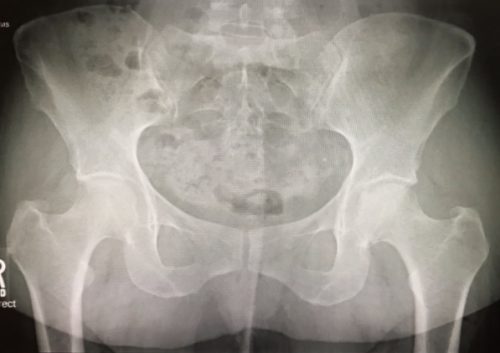
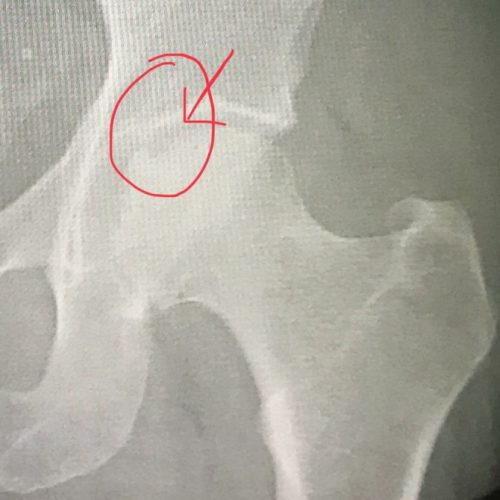
    But this summer I added a new diagnosis to the list. A rare disease where my bones are dying. Literally. (And I mean that “literally” literally. It’s called avascular necrosis.) I was immobilized for nearly all of July from the pain. The flare seems to be over so I am able to move physically again, thank goodness, but the disease has added a new fight to my life. Because it’s rare, even specialists don’t necessarily know how to diagnose and treat it and I have spent too much of my very little energy this summer trying to get appropriate care for this disease. I have not yet succeeded.

    You can see the AVN collapse here.

    Anyway. All this to say that I had hoped to spend time and energy after my graduation last December in growing SOAM to something new. I have to set that aside indefinitely for now.

    Poverty is a very real trauma and I am so tired, you guys. So very tired.

    SOAM will stay up and active as long as I can manage it. Please submit your stories! If any media wants to do interviews, I’m still open to that! But as for the in-person classes, parties, workshops, and events? That is a dream that I must lay aside for now.

    This summer I was not working (I work during the school year as a tutor) but I had planned to do other work to cover the lack of income. Unfortunately that did not happen due to my new diagnosis and its flare up, as well as some other shit the Universe thought would be fun to throw at me (I see you there, Universe, and I am not amused). So we are behind on so many things financially, including some essentials like, you know, mortgage and HOA payments. If you can help us during this difficult time in our lives, I would be so grateful. We have a gofundme you can contribute to, if it you prefer, you can ask me for my Venmo or Paypal. Feel free to share the link as well.

    Thank you all for everything through the years and for everything that will be coming to us in the future!